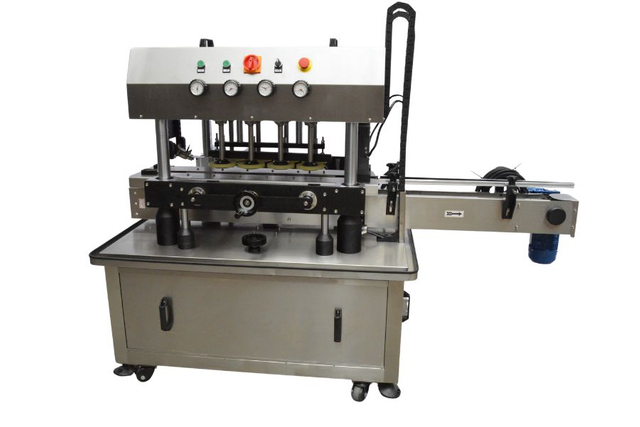
Modern automatic packaging machines integrate with factory automation through PLCs, industrial Ethernet, servo controls, safety circuits, inspection devices, and MES/SCADA data exchange. A line running at 120 packs per minute may exchange hundreds of status and process tags with conveyors, fillers, checkweighers, labelers, robots, and palletizers. In a 2024-era plant, protocols such as PROFINET, EtherNet/IP, EtherCAT, OPC UA, and PackML can connect equipment from different suppliers. Good integration is measured at line level: stable product flow, controlled stops, repeatable recipes, accurate reject handling, traceable production records, and fast recovery after faults—not simply the maximum speed printed on one machine's specification sheet.
A packaging machine normally joins the factory at the PLC level first. Its controller reads photoelectric sensors, pressure switches, temperature inputs, encoders, safety devices, and product-presence signals while controlling motors, pneumatic valves, heaters, sealing mechanisms, and servo axes. A machine producing 100 packs per minute has only 600 milliseconds between finished packs, so communication and motion sequences cannot depend on manual operator responses.
That timing requirement explains why neighboring equipment exchanges defined machine states. An upstream filler may send "ready," "running," "starved," or "faulted" information, while the downstream conveyor reports whether it has space. When a machine changes from running to stopped, the surrounding equipment needs an agreed response within the available accumulation time rather than continuing until products collide.
A five-minute buffer sounds generous, but at 120 packs per minute it represents 600 packages. Conveyor length, package pitch, accumulation pressure, and restart behavior therefore matter as much as nominal machine speed.
Physical flow comes next because network communication cannot correct poor product handling. A 100 mm-long package moving with a 150 mm pitch at 100 units per minute already requires about 15 meters of product movement per minute before acceleration zones are considered. Sensors and variable-speed conveyors maintain spacing as products move from processing to primary packaging and then toward secondary packaging.
Servo-controlled machines make synchronization more flexible. Instead of relying entirely on gears and mechanical cams, electronic axes can coordinate film feed, auger rotation, filling, sealing, indexing, and discharge. Modern servo systems can update motion commands in milliseconds, allowing a machine to change speed when upstream product supply falls from 120 units per minute to 95 without repeatedly stopping and restarting the entire line.
The same principle applies when liquid or semi-liquid products move through filling and capping equipment. Filling accuracy, container indexing, cap feeding, torque control, and discharge timing have to match the conveyor and downstream inspection equipment. At 60 bottles per minute, one container arrives every second; a two-second interruption can already disturb spacing unless accumulation and stop logic have been planned.
Machine-to-machine communication can use hardwired I/O for a few basic states, but larger installations commonly use industrial Ethernet. PROFINET, EtherNet/IP, and EtherCAT can carry many control variables over one network, reducing the amount of individual wiring required. Ethernet technology has existed in industrial automation for decades, while OPC UA, standardized by IEC 62541, provides a structured method for exchanging information between equipment and higher-level software.
Standard machine states can also reduce integration work. PackML, developed through OMAC and associated with ISA-TR88 concepts, describes states such as Execute, Held, Suspended, Stopped, and Aborted. When machines from several suppliers follow the same state model, a line controller does not need a completely different interpretation of "running" or "stopping" for every piece of equipment installed after 2020.
| Integration layer | Typical information | Practical timing |
|---|---|---|
| Sensors and actuators | Presence, position, temperature, pressure | Milliseconds |
| PLC-to-PLC | Ready, run, stop, fault, speed | Milliseconds to seconds |
| Inspection | Weight, code, seal, reject result | Per package |
| SCADA | State, alarms, counts, trends | Seconds |
| MES | Order, SKU, batch, output | Seconds to minutes |
| ERP | Production and inventory records | Minutes or longer |
The table also shows why one network should not treat every message equally. A servo position may need millisecond-level handling, while an ERP production report can arrive several minutes later without affecting the package currently moving through the machine. Separating real-time machine control from business reporting keeps production running even when a higher-level server is temporarily unavailable.
Quality equipment adds another data path. A checkweigher measuring 120 packages per minute produces two weight readings every second, while a vision system may inspect several attributes on every image: label presence, barcode readability, printed date, cap position, or package orientation. Each rejected item must remain associated with its inspection result until it physically reaches the reject station.
That association becomes harder when conveyors change speed. If inspection occurs 3 meters before rejection and belt speed is 0.5 meters per second, roughly six seconds pass between detection and removal. PLC logic may track the package by encoder distance or queue position rather than using a simple timer, reducing incorrect rejection when conveyor speed changes by 20% during production.
Reject confirmation deserves separate monitoring. Sending a reject command is not the same as proving that the defective package left the production stream.
A sensor at the reject point can confirm removal, and the controller can stop the line when confirmation is missing. Food, pharmaceutical, medical-device, and cosmetics plants often need stronger records because a packaging error may involve the wrong lot code or label rather than a mechanically damaged pack. GS1 standards have supported standardized identification for decades, and modern barcode systems can connect item information with batch and logistics records.
Recipe control addresses another integration problem: product changeovers. A packaging machine handling 20 SKUs may require different fill volumes, bag lengths, sealing temperatures, conveyor speeds, label formats, inspection limits, and servo positions. If an operator enters 10 parameters manually for every change, there are 10 separate opportunities for a typing or selection error.
Central recipe management reduces that manual work. An MES or line controller can send an approved SKU identifier, after which the machine loads stored settings and verifies compatible tooling or materials. A 500 mL bottle recipe, for example, can call different fill settings, label data, cap parameters, and inspection tolerances from a 250 mL version without asking operators to enter each number separately.
Changeover mechanics still matter. Servo-positioned guides and automated adjustments can move to stored positions, while sensors verify whether the expected format parts are installed. If a factory makes eight product changes during a shift and automation saves five minutes per change, 40 minutes of scheduled production time become available again; the actual improvement depends on cleaning, material replacement, and validation requirements.
Once recipes are controlled, production data can move upward to SCADA and MES. The machine can report total count, good count, reject count, operating state, active SKU, alarm history, speed, temperatures, pressure readings, and stop duration. A line operating for an 8-hour shift generates 28,800 seconds of state information, enough to distinguish frequent 15-second interruptions from one long maintenance stop.
That distinction matters for OEE. Availability compares actual operating time with planned production time; performance compares actual output rate with the expected rate; quality compares good output with total output. A line with 90% availability, 95% performance, and 99% quality has an OEE of about 84.6%, showing why small losses in several categories accumulate.
The useful part is the reason behind each loss. A machine may record 30 minutes of downtime, but maintenance teams need to know whether 18 minutes came from film changes, 7 from downstream blockage, and 5 from safety-door openings. With 2026-era connected equipment, timestamps and machine-state histories can provide this detail automatically rather than relying only on handwritten shift reports.
Older factories require a different integration approach because equipment installed in 2005 may not support the same communication methods as a new machine. A legacy conveyor might expose only four hardwired signals—ready, running, stopped, and fault—while the new packaging system may provide hundreds of PLC tags through Ethernet. Replacing the conveyor solely for network compatibility is rarely necessary.
Remote I/O, protocol gateways, or a line PLC can translate those limited signals into states understood by newer equipment. Legacy integration should preserve simple local machine control where it remains reliable while adding only the signals needed for synchronization and reporting. A 20-year-old motor starter does not need OPC UA merely to switch a conveyor on and off.
Safety integration follows a stricter path. Emergency stops, interlocked doors, light curtains, scanners, and robot-cell gates use safety-rated circuits or safety PLCs designed for defined functional-safety requirements. ISO 13849-1 and IEC 62061 are widely used frameworks for machinery safety, and IEC 61508 was first published in 1998 as a broader functional-safety standard.
Stopping zones should match the mechanical risk and production layout. Opening a guard around a palletizing robot may require the robot and its local conveyor to reach a safe state without automatically removing power from an unrelated filler 30 meters upstream. Engineers assess stored energy, stopping time, access points, restart conditions, and required performance levels before deciding how far each safety function extends.
Networked machinery also changes cybersecurity requirements. IEC 62443 provides an industrial automation and control-system security framework, while plants increasingly separate operational technology from ordinary office networks. User accounts, remote service access, firewall rules, backups, controller changes, and software versions should therefore be managed as part of machine commissioning rather than added months later.
Remote supplier support illustrates the issue. A technician may need PLC or HMI access for 30 minutes to diagnose a fault, but permanent unrestricted remote connectivity increases unnecessary exposure. Plants can use authenticated access, time-limited permissions, logging, and network segmentation so maintenance remains possible without giving an external connection broad access to unrelated production equipment.
Commissioning brings all of the interfaces together. Engineers can test a defined sample of conditions—for example, 20 normal starts, 20 controlled stops, 10 upstream starvation events, 10 downstream blockages, and multiple emergency-stop scenarios—rather than validating only steady production. Tests should include power recovery, network loss, rejected packages, incorrect recipes, missing materials, and communication failures.
Factory acceptance should then measure line behavior rather than only individual equipment speed. If the packaging machine is rated for 150 units per minute but the complete line sustains 125 units per minute with 98.5% accepted output, the 125-unit figure is more useful for production planning. Recording the reason for the 25-unit gap also shows whether improvement belongs at the packager, filler, conveyor, inspection station, or downstream case packer.
A well-integrated installation therefore has clear ownership of every important signal and production record. The PLC handles time-sensitive machine sequences, safety hardware handles personnel protection, inspection equipment supplies package-level results, SCADA presents operating information, and MES connects output with orders and batches. With those boundaries defined, a packaging line installed in 2026 can work with equipment from several generations without requiring the entire factory to use one manufacturer or one automation platform.